Help?
support@expertscentre.com
1300 455 090
Monday-Friday: 9-5pm AEST
Location:
Craigieburn 3064 VIC - Australia.
Graphican.com Pty Ltd TA Experts Centre
ABN: 29630287642

Help?
support@expertscentre.com
1300 455 090
Monday-Friday: 9-5pm AEST
Location:
Craigieburn 3064 VIC - Australia.
Graphican.com Pty Ltd TA Experts Centre
ABN: 29630287642


While getting read to apply for your next job, you have updated your LinkedIn. You are connecting with other people and you’re getting ready to apply for dozens of roles. You start applying but results is a consistent silenc. You hear nothing back.
This blog post is going to discuss four major resume killers that harm applicants the most.
Job market in Australia and New Zealand is competitive. In order to stand out, your CV must be on point and very specifically targeted for each individual role you are applying. At the same time it must not have any of the silent killers which can potentially pull your CV ranking down by the ATS systems.
That is one of the most common problems found in the resume where you describe what you have been doing versus the kind of impact you created for the business.
For example, saying “I managed social media accounts” or “I was responsible for team leadership” doesn’t show the real impact you had on the business. Such statements tell the recruiter what you did but do not reveal how well you performed those roles. Recruiters and ATS systems want to see your performance data. This data shows your measurable impact for the specific positions you’ve held.
As we understand, recruiters spend 7.4 seconds reviewing a resume and deciding whether they should spend next 30 seconds on it versus toss it out. In these 7.4 seconds, you must show the recruiter that you’re a strong candidate. Use the listed statistics to prove your skills and the impact you can make for the business.
How to fix it: Use the Achievement Formula: Action Verb + Task + Quantifiable Result. For example, instead of saying “I Managed social media,” use: “I Grew Instagram engagement by 35% in 6 months, contributing to a 15% increase in qualified leads.”
When you hold important roles in an organization and wear many hats, you may want to share all your experiences. They show your wide skill set. However, long paragraphs can make it hard for recruiters to see the key qualities they seek. It is a fact that if you cannot comfortably read your own resume others will definitely struggle more than you do.
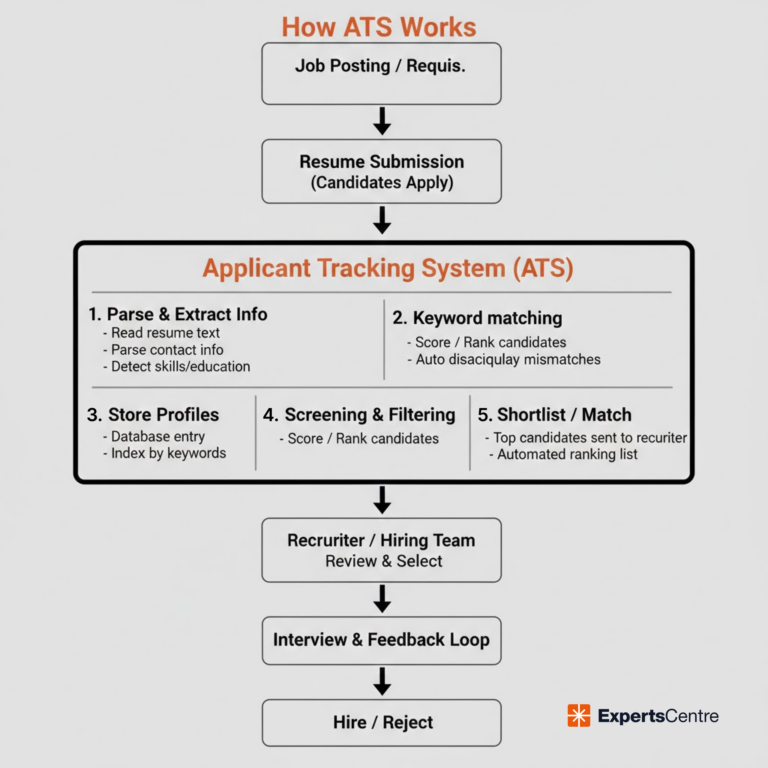
As per the AHRI report, 70% of Australian organisations use applicant tracking systems to filter candidates. These robots and recruiters look for scannable content. This helps them find information quickly. If resumes aren’t easy to scan, they may be rejected.
How to fix it? Fixing this killer is rather easier by relying on white space, clear headings, short and well-articulated bullet points, and strategically building the key phrases that you want recruiters to notice. You should make your job titles, the company you served and key achievements prominent and impossible to be missed at a glance.
Take, for example, words like ‘hard worker’ or ‘I’m detail-oriented’. They fill the gap on the resume, but these sentences mean nothing to recruiters.
Why does it fail? It fails because your resume needs to speak the language recruiters and ATS systems are scanning for.
For example, if the job ad mentions “project lifecycle management,” and your resume says, “I oversaw a project,” that’s not the same. ATS systems won’t connect it to what they seek, so you miss the chance to stand out where you should have.
How to fix it? Mirror the language of the job description. You need to integrate specific keywords and phrases into your skills section and achievements list — exactly as the job description wants to see them.
But be careful: don’t replicate the job description word for word. Don’t copy everything it asks for. There needs to be a healthy balance between who you are and what the job is looking for. That way you create a realistic match between the two.
Your professional summary should echo, or at least resonate with, the recruiters and the primary responsibilities of the job you’re applying for.
Sometimes, you might believe an old structure is still effective. For instance, you may add an objective section like “I’m seeking a challenging role in…” or stuff too many skills into one paragraph. This can lead to a long, overwhelming wall of text.
This is a problem because the start of your CV is one of the most valuable real estate you have. Recruiters give you 7.4 seconds. That section needs to elevate and talk about important aspects of your skill set, your achievements, as well as why what you have achieved.
You need to provide your recruiters enough reason to decide to continue spending the next 30 seconds scanning your resume.
How to fix it? First of all, craft a powerful profile. In the first two to three lines of your introductory paragraph, state clearly who you are, your key value proposition, and the top career highlights you had thus far.
Here are two examples.
Weak example: “Seasoned professional seeking a managerial role to utilize my skills.”
Stronger statement: “Strategic marketing manager with 8+ years of experience driving revenue growth in competitive SaaS markets. Expert in converting data and statistics into insights and leading campaigns that deliver lead generation 20–30% above targets.”
Fixing these killers isn’t just about better writing. It’s about employing a real strategy.
This rewrite requires understanding exactly what Australian recruiters and ATS software filters are looking for in your specific industry.
Industry knowledge and those niche insights matter. ATS robots and AI content writers can polish your CV and make it look error-free, but they fail to grasp the specific emphasis and skills that actually count in your field — the ones that make recruiters shortlist you.
Using an AI tool isn’t a celebrated skill anymore. It can actually harm your resume instead of helping.
What if you could have help from a senior recruiter who’s actually on your side — improving your resume with a strategy that works for your exact industry and niche?
Deborah O’Brien from Experts Centre has screened over twenty thousand resumes, working for top ASX-listed companies. She doesn’t just re-edit your resume — she applies the strategy relevant to your sector and makes sure everything the recruiter is looking for is right there for their scanning eyes.
Experts Centre’s Resume Upgrade Package gives you the strategy that solves all four silent killers. This includes:
This creates the difference between getting seen or ignored.
“After working with Debra to revamp my resume, I started landing interviews and hearing back right away,” says a former client, a Warehouse Manager.
Every week without interviews is not only frustrating, this silence has a real cost. An average Australian full-time salary amounts to more than $2,000/week. An extra week can cost $2,000 and unaccounted loss to your professional growth. them.

Meet your Resume Expert
Upgrade your resume into one recruiters can’t ignore